
Tentpole and always-on Campaign integration
Managing consistent performance-driven campaigns alongside flagship brand efforts requires a strategic balance of resources, focus, and collaboration. In the OPSM case study, performance campaigns were designed to run consistently, ensuring the business achieved measurable outcomes like in-store eye test bookings, while flagship brand efforts spotlighted creativity and storytelling to enhance OPSM’s brand positioning.
The key approach was integrating performance elements into every stage of the campaign while leveraging the flexibility of digital channels. For example, programmatic advertising and paid search were deployed as “always-on” channels, delivering consistent conversion-driven messaging that complemented the flagship campaigns. Data and analytics teams continuously monitored performance metrics such as ROAS and conversion rates, enabling optimization in real-time to ensure steady results.
Additionally, close collaboration between creative and performance teams ensured that flagship campaigns reinforced brand sentiment while tying back to the performance goals. For instance, high-impact creative elements featured in video and display ads were repurposed to drive both awareness and action, ensuring that every campaign contributed to the business’s overarching goals. This dual focus allowed OPSM to maintain ongoing measurable success without compromising its brand identity or creative ambition.
When planning and executing a brand-building tentpole campaign, the focus shifts toward long-term objectives such as creating emotional resonance, improving brand perception, and driving widespread awareness. In contrast, always-on performance campaigns prioritize short-term, measurable outcomes like conversions, lead generation, or sales. Here’s how the approaches differ:
Brand-Building Tentpole Campaigns:
- Objective:
- Build emotional connections and enhance brand equity.
- Drive top-of-funnel metrics like awareness and engagement.
- Creative Approach:
- Use high-impact, storytelling-driven content that reflects the brand’s values and aspirations.
- Invest in cinematic, eye-catching visuals or narratives that leave a lasting impression on audiences.
- Example: “Penny the Pirate” campaign for OPSM focused on engaging storybooks to build brand connection and awareness.
- Media Strategy:
- Focus on high-reach channels like TV, programmatic video, digital OOH, and social platforms for mass visibility.
- Target broad, demographically driven audience segments to maximize exposure.
- Measurement:
- Evaluate success through metrics like brand lift, sentiment, reach, and engagement (e.g., impressions, shares).
- Consider advanced tools like brand tracking studies or sentiment analysis.
- Pacing:
- Campaigns are launched in bursts, often aligned with events or cultural moments, to generate buzz and share of voice.
Always-On Performance Campaigns:
- Objective:
- Deliver immediate, measurable results, such as sales, lead generation, or bookings.
- Focus on lower-funnel actions to drive ROI.
- Creative Approach:
- Use direct-response messaging with clear CTAs (e.g., “Book Now,” “Shop Today”).
- Optimize for formats that emphasize efficiency over aesthetic storytelling.
- Media Strategy:
- Leverage data-driven, intent-focused channels such as paid search, programmatic display, and remarketing.
- Target audiences based on behavior, demographics, and past interactions for precision.
- Measurement:
- Rely on performance metrics like CTR, CPA, ROAS, and conversion rates.
- Use real-time analytics and attribution modeling to optimize campaigns dynamically.
- Pacing:
- Run continuously throughout the year to maintain consistent lead generation and keep the brand top-of-mind for in-market consumers.
Key Differences to Focus On:
- Messaging and Content: Tentpole campaigns should inspire, while always-on campaigns should convert.
- Audience Targeting: Tentpole campaigns target broad audiences, whereas always-on campaigns target refined, intent-driven segments.
- Budget Allocation: Tentpole campaigns often require higher investments over a shorter period, whereas always-on campaigns require steady, scalable budgets.
Balancing these two types of campaigns allows you to achieve both short-term business objectives and long-term brand growth.
Effective resource management across performance and brand building campaigns requires balancing the steady demands of always-on performance campaigns with the high-intensity bursts of tentpole brand-building efforts. By aligning teams, budgets, and timelines, agencies can ensure consistent delivery of measurable results while preserving the creativity and impact needed for flagship campaigns.
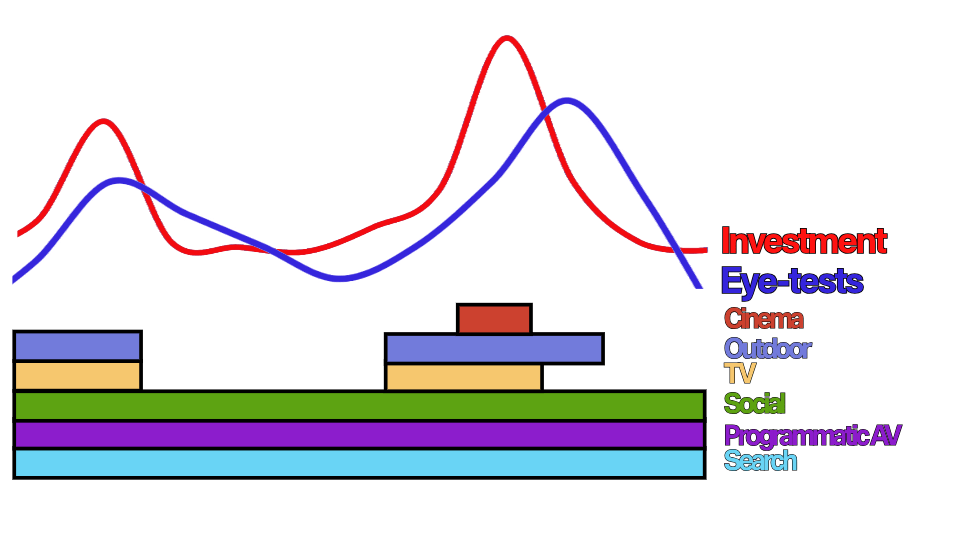
Regular weekly reporting ensures collaboration between SBUs. Data considered and commentary written 24 hours before sharing, so results are not thrown together, but insights are carefully considered and absorbed across the teams. Pre-reporting calls are held 24 hours prior to client delivery to align on testing phases, new initiatives, anything which could impact on another channel’s performance.
Measuring Success: Tentpole and Always-On Performance Campaigns
Tentpole Campaigns
The success of tentpole campaigns is measured by their ability to drive awareness, engagement, and sentiment, aligning with top-of-funnel objectives. Key metrics and methodologies include:
- Awareness and Sentiment Tracking: Leveraging tools like Nielsen Brand Uplift Studies to assess changes in audience perception and recall.
- Engagement Metrics: Monitoring programmatic and social reach, impressions, and interactions to evaluate audience participation.
- In-Store Footfall Measurement: Tracking physical visits to stores influenced by the campaign through location-based analytics.
- Marketing Mix Modeling (MMM) and Multi-Touch Attribution (MTA): Applying advanced analytical techniques to measure the impact of campaign investments across various channels and to understand how each touchpoint contributes to overarching goals.
These insights provide a holistic view of the campaign’s effectiveness, ensuring that branding efforts yield meaningful results.
Always-On Performance Campaigns
Always-on campaigns prioritize short-term, measurable outcomes like conversions and revenue generation. Key metrics and approaches include:
- Conversion Rates: Evaluating the success of call-to-action (CTA) strategies in driving audience actions, such as purchases or form submissions.
- Online Bookings: Tracking digital sales or appointment bookings directly attributable to performance efforts.
- In-Store Conversions: Using cross-channel attribution modeling to identify the relationship between online activities and offline behaviors.
- Investment ROI: Measuring return on ad spend (ROAS) and overall profitability to ensure resource optimization.
By maintaining constant monitoring and optimization, always-on campaigns deliver consistent and impactful results that complement tentpole efforts. Together, these approaches balance long-term branding with immediate performance outcomes.
Perpetual Learning: Sharing Lessons Across the Wider Community
The integration of Tentpole and Always-On performance campaigns offers a treasure trove of learnings that should be shared not only within the agency but across the broader community. By doing so, we foster a culture of knowledge-sharing and drive industry-wide advancements. Key opportunities for this include:
- Client Collaboration: Sharing campaign insights with clients through workshops or reports, demonstrating how aligning brand-building and performance goals leads to mutual success.
- Agency Teams: Encouraging interdepartmental knowledge exchange, ensuring lessons learned in one channel or campaign are applied across others to refine strategies.
- Panel Discussions and Conferences: Participating in industry events to present case studies, highlight key achievements, and share innovative practices.
- Award Entries: Documenting and submitting successful campaigns to highlight the agency’s creative and strategic excellence, further inspiring others.
Key Takeaways to Promote
- Aligning Brand and Performance Goals:
- Tentpole campaigns enhance brand equity and awareness, while Always-On efforts drive measurable performance.
- Successfully uniting these goals ensures campaigns are impactful across all stages of the marketing funnel.
- Benefits of Cross-Channel Coordination:
- A unified approach maximizes the strengths of each channel, ensuring seamless audience engagement and consistent messaging.
- Cross-channel alignment improves efficiency by reducing redundancies and amplifying the collective impact of all campaign elements.
- The Value of Innovation and Continuous Improvement:
- Test-and-learn initiatives are essential for staying ahead in an ever-evolving landscape, fostering iterative improvements at every stage of a campaign.
- Understanding why optimizations succeed through behavioral economics allows these learnings to be applied broadly, driving stronger outcomes across the board.
By embracing perpetual learning and actively sharing these insights, the agency not only strengthens its internal capabilities but also positions itself as a thought leader within the industry, contributing to the broader conversation and setting benchmarks for success.
